I’m tired of this empire:
tired of being mistress to its master,
raw to its refined,
spice to its substance,
colour to its white,
extra to its ordinary,
outlier to its centre.
I’m tired of its tongue
upon my tongue.
Category: Poems
-
Poem a Day: 5
-
Poem a Day: 4
I don’t know how to pray.
I once found a bible tucked away on a shelf in a backroom in our basement,
and unzipped its black cover to
sneak a few peeks. My father was taught
by nuns, St. Aloysius,
fish Fridays, communion, but
only baptized us out of
habit.Sundays he would pack sesame snaps, granola bars and juice boxes
into brown paper bags,
take us walking in marshland, meadow, forest,
Elk Island, Hawrelark Park, Clifford E. Lee Nature
Sanctuary, make us stop and wait while he thumbed well-worn pages of
his plant id book, to the songs of
chickadees. We’d drag our feet down aspen aisles, only drawn forwards
by the promise of
McDonald’s afterwards.He never taught us to sit still through mass
but he taught us to be quiet,
to sit with our backs to the hill and eyes on the river,
to kneel beneath branches among pine needles and ladybugs,
to stand still
and stare up in awe at Big Dipper, Cassiopeia, Orion.
-
Poem a Day:3
Asahi

There are many ways to erase
community.Remove baseball players from home
base.
Replace.
Remove baseball diamond from park.
Replace.Displace
its grandmothers.Remove benches from park,
bricks from walls.
Replace.
Misplace names.
Forget their names.
Forget their names.
Forget their names.
Rename.
Assimilate.
Replace.
-
Poem a Day: 2
Tomb Sweeping
It is raining.
I don’t know where the bones lie, but
the salt water I swallow and
the bright of white blossoms
remind me that it’s time to sweep the ancestors’ tombs and
give my love
to the living.
-
Poem a Day: 1
April is National Poetry Month. I’m a week late to the game of a poem a day, til the month of May, but better late than never. Here is my first poem.
I am
a floating lotus that’s forgotten
it’s anchored by roots
and bound by lily pad
borders.I am not
sure where to begin because I don’t even know
what I’ve forgotten.
-
In Relation to Land
AFTER BLACK ROCK
I slept through fits of fever
stomach clutching stones
head floating empty
waking to wild wind through black
hunger, without
will or words(I did not think to kiss the stone)
wondering what grief or poverty –
famine, empire, and holy ghost –
makes memorial out of big
black
rock, bluntly chiseled
epitaph, no Celtic cross atop it?
This St. Patrick’s Day, I’m wondering about the Irish in me. I’m a fourth generation Irish Canadian. I have absolutely no idea what this means. I have never celebrated Irish holidays and never been to Ireland. I’ve observed that all my relatives on this side of the family have thick hair, like going for long walks, and all enjoy ice cream. Beyond that, I have no clue what “our traditions” are, when the last time it was that someone in our family spoke Gaelic, and if it’s possible, or even desirable, to lay claim to an ancestry that I have no interaction with.
Mostly, I wonder about our relationship to land. I wonder if my ancestors were indigenous to Ireland. I know they were Roman Catholic Irish, and may have been flax farmers, possibly from County Armagh or County Kerry. But I don’t know what they felt when they sailed from Ireland to Canada, never to return. Likely displaced by poverty and politics, and pulled across the sea by the promise of land, made available to them by the hands of the same empire that pushed them from their own homeland. I wonder if they carried sadness with them, fear, optimism, excitement, hope. If their descendants inherited homesickness, longing, loss, gratitude for the opportunity for new life in a new land, freedom.
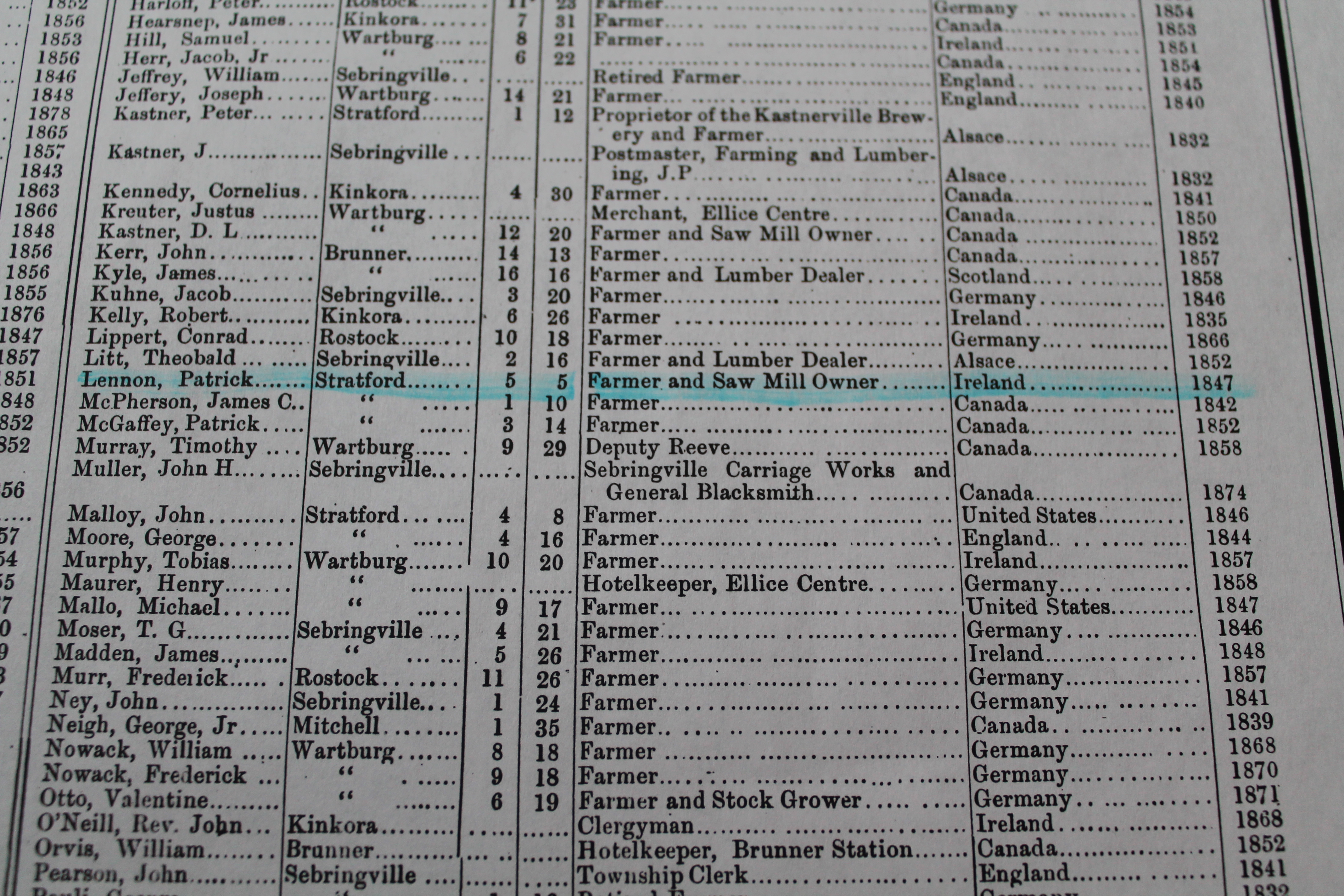
We know they arrived in Canada in 1847, during the potato famine, so were likely “famine emigrants”, refugees in a sense.
Last summer, on a family visit to Montreal, I went searching for what I’d heard called the Black Rock Memorial.

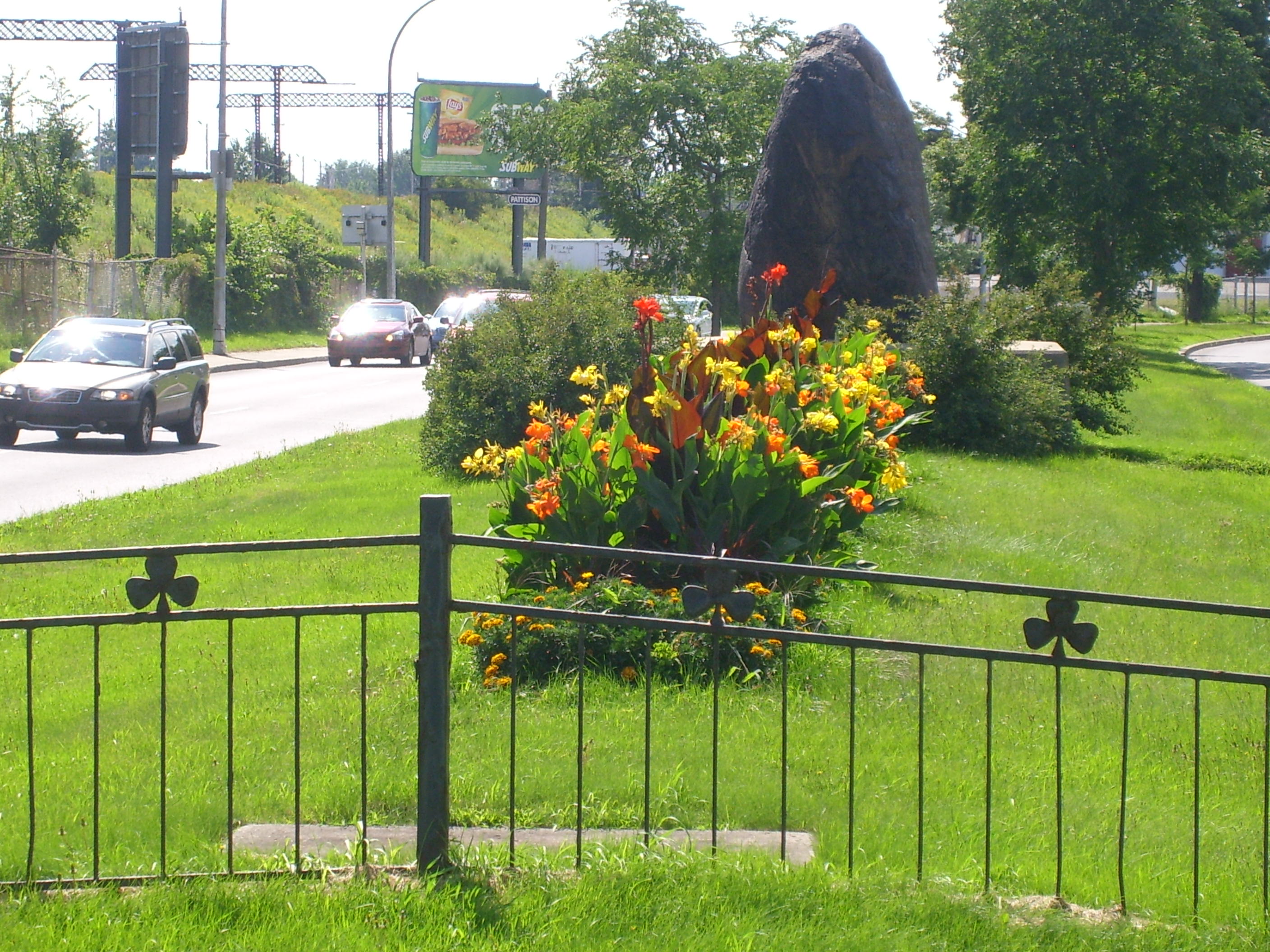
The Irish Commemorative Stone in Montreal, also known as the Black Rock. The Irish Commemorative Stone or Black Rock (Leacht Cuimhneachain Na Ngael) in Montreal stands in an unassuming place, at the entrance to Victoria Bridge, surrounded by four lanes of traffic.
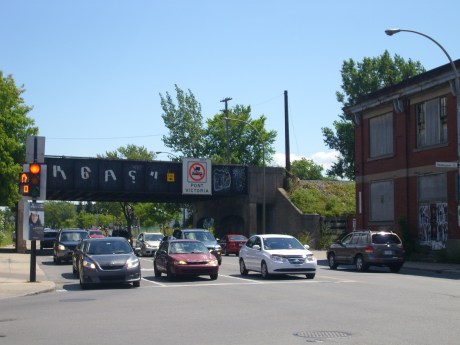

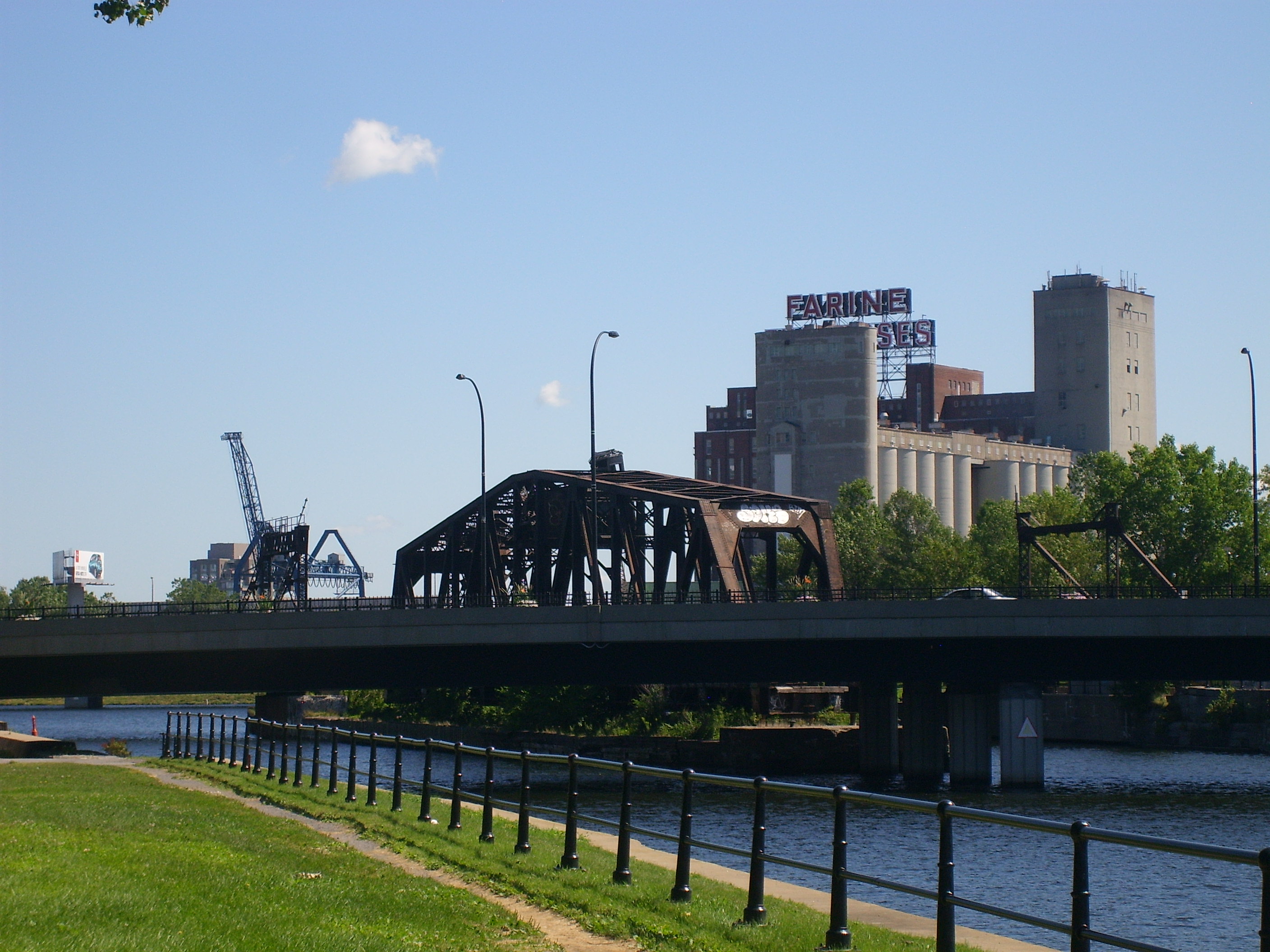
It approximately marks the centre of a cemetery, in an area known as Windmill Point, where 3,500-6,000 Irish immigrants who died in 1847 of typhus or “ship fever” were buried in mass graves. In 1859, workers constructing the Victoria Bridge, many of whom were of Irish descent, discovered the mass grave, and decided to erect the memorial.
Each year at the end of May, the Montreal Irish-Canadian community hosts a walk from St. Gabriel’s church in Pointe St. Charles, to the stone to commemorate those lives that were lost. The neighbourhoods bordering the Lachine Canal, Point St. Charles and Griffintown began as a working class, Anglophone neighbourhoods, inhabited by many Irish, who worked on the Lachine Canal, or the Grand Trunk Railway or built the Victoria Bridge.

I don’t know if my ancestors passed through this port. I don’t know if any of them lost family members to typhus. I don’t if they were strong, or lucky, or smart.
I do know that their relationship to the lands they arrived on was one of homesteader, pioneer, settler, farmer.
settler
noun
the settlers were ill-prepared for the severe winter ahead: colonist, colonizer, frontiersman, frontierswoman, pioneer, bushwhacker; immigrant, newcomer; historical homesteader. ANTONYMS native.
Ellice Township The land they acquired was referred to as Lot 6, Concession 6, Ellice Township in Perth County, Ontario. The county was named after Perthshire, Scotland. This land was within the Huron Tract Purchase also known as the Huron Block. In 1827, 2.1 million acres of land was ceded by the Anishinaabe of Kettle and Stony Point to the British Crown, with the signing of the Huron Tract Treaty, Crown Treaty 29. Over a 9 year period, the British met in council with the Chippewa of the region to discuss acquisition of the land. In return the Chippewas of Chenail Ecarte (Walpole Island), River St. Clair (Sarnia) and River Aux Sauble (Kettle and Stony Point) were granted a perpetual annuity. Four reserves, comprising less than 1 per cent of the land, were reserved out of the cession in locations chosen by the Chippewas (Ipperwash Commission of Inquiry, Historical Background). The Huron Tract was purchased by the Canada Company, an agent of the British government, to be distributed to colonial settlers of Upper Canada. John Galt, the founding member of the Canada Company, originally envisioned the settlement of the Huron Tract as an agricultural experiment.
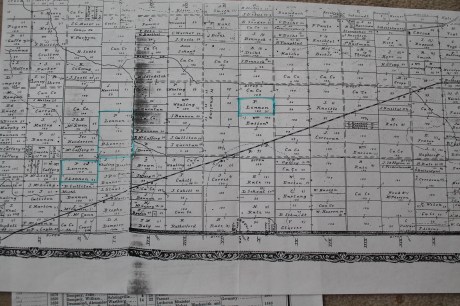
For the next several generations, my family made their homes in and around Stratford, Ontario, on the Avon River, named after Shakespeare’s hometown. They were farmers, teachers, and small business people. They lived on a farm, and then later in brick houses they had built on property they owned. Only in the last generation have they left the region to migrate west within Canada, now owning and renting homes in cities in Ontario, Alberta and BC.
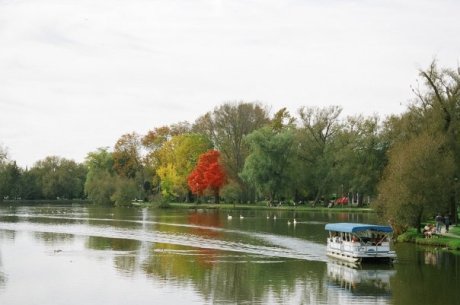
The Avon River, Stratford, Ontario. settle
verb1 he settled in Otsego County: make one’s home in, set up home in, take up residence in, put down roots in, establish oneself in; live in, move to, emigrate to.
2 immigrants settled much of Australia: colonize, occupy, inhabit, people, populate.
3 Catherine settled down to her work: apply oneself to, get down to, set about, attack; concentrate on, focus on, devote oneself to.
4 the class wouldn’t settle down : calm down, quiet down, be quiet, be still; informal shut up.
5 a brandy will settle your nerves: calm, quiet; soothe, pacify, quell; sedate, tranquilize; Brit. quieten. ANTONYMS agitate, disturb.
6 he settled into an armchair: sit down, seat oneself, install oneself, ensconce oneself, plant oneself; informal park oneself, plunk oneself.
7 a butterfly settled on the flower: land, come to rest, alight, descend, perch; archaic light.
8 when the stirring stops, the sediment settles: sink, subside, fall, gravitate. ANTONYMS rise.There is so much I don’t know, and I welcome feedback, information and dialogue. I am working to understand what it means to have been born and raised on land in Treaty 6 Territory, and to now be living and studying on the traditional, ancestral and unceded territories of the Skwxwú7mesh, Xwméthkwyiem and Tsleil-Waututh nations.
I hope that if there is any point in knowing where one comes from, and if it is possible to carry anything in me that is Irish, it is to be able to grasp onto a seed of empathy. A seed that can grow into a commitment to stand with those who have been, and continue to be, displaced or dispossessed of the lands they call home, be it in the name of city building or resource extraction. I hope it can grow into an awareness of how I am complicit in displacing or dispossessing others of their homes. I hope that I can grow to understand what it means to live in relation with this land upon which I am a guest.
-
This Lack of Words (This Daughter’s Tongue)
There are things unspoken between us.
This lack of words becomes a gap
becomes a black hole of
language, becomes a complicated kind of
rage that gets deposited in the backrooms of our
brains and the cavities of our hearts.This daughter’s tongue tries to find the words but they stick
in her teeth like bits of meat
and she hasn’t got a toothpick.
She tries to find the words but they fall from her lips
like grains of rice
and she’s not sure how to unfold this language of the gut
with her language of the brain.This daughter’s tongue gets stuck
on the tones of this sing-song language,
this language of puns and wordplay, of homonyms and homophones, of
synonyms, proverbs, ancient poems, and double and triple entendres
that she’ll never ever get
because it takes a lifetime of living wrapped
in its context, and syntax and rhythm,
in its teahouses, markets and temples
to know it
in throat and stomach and bones.This daughter’s tongue does not speak
her mother’s mother tongue,
or her father’s mother’s mother’s mother’s mother tongue.
Not really. She
has tried, tries, is trying, will try.
Why? Why try to speak a language not required in day-to-day life?
A language with no power, no future, no hype?
Why?Because she needs to be able to taste
the food that makes her heart and stomach fly.
Because she needs to know what the old books
teach and the poets speak and the revolutionaries preached.
She needs to know the names of rivers and mountains and cities
that she may never see. She wants to know
what the grandfathers laugh about under the trees and
the grandmothers yell from their balconies.So, she goes looking for this language.
She looks in rice-cooker kitchens
in railroad ties and shipping yards
in the side-streets of nation
and alleyways of empire.She looks for it in the throats of colonies, the colonized, and the colonizers.
In the backroads, the countrysides, the islands and the coastlines.She looks in all those places where we grew up speaking
differently, in the hearts of us who come seeking
languages that we think we ought to speak
as if these languages will fix a crack in a tongue
a gap in a lung
a shortage of spirit
a crooked tooth, a split lip
as if
these language will tune our hearts
and sync us to some universal rhythm that’s been playing all this time
(all we had to was un-mute the volume and we wouldn’t have been dancing on the off beat).But after all this lacking and looking, she comes to see
that this language is not inherited, it’s not inherent.
It has to be learned. It’s not a talisman, nor a trinket or a party trick.
Not some chip you can stick in your brains and just press play.
There is no quick way.
It has to be learned.She comes to see that maybe it’s not about this language alone.
Maybe this language won’t fix anything
until borders and bloodlines become irrelevant.
Until we stop saying what we are not, and what we cannot
and start saying what we are
what we can
and what we will.Because maybe it’s about learning
to speak with the tongue and from
the heart, which takes starting
from somewhere
that’s so hard to get to, but feels so familiar.Learning to speak
is like learning to eat.
It takes tuning taste buds to different frequencies,
rolling vowels like melon seeds
from the backs of our mouths, out over our teeth
to send them flying out into the world.
It takes courage, see,
because like anything else, this
language is learned,
and nothing is inherent
and our survival depends on learning to speak with our tongues and from our hearts, and maybe if
we speak, our stories will be the stop gaps
in the black holes
left by what’s unspoken between us.
So that,
instead of wandering under this open sky
with no roadmap to orient by
as though we’re always arriving for the first time,these stories will give us our bearings.
-
Untitled
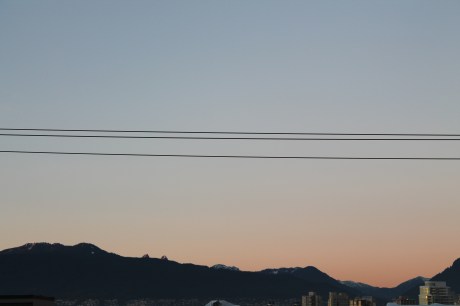
Mornings, under mist
these mountains are mum
lips pressed tight,
guardians of secretstil I catch them
smiling against sunset
twin sisters, speak,
guardians of peacethen across water, I see
two lion-dogs yawn
one mouth open and
one mouth closed
mother and father and
beginning and end,
guardians of entrancesparallel lines meet
and I know why
this place feels old like home.~~~
“The Two Sisters” in The Legends of Vancouver,
E. Pauline Johnson-Tekahionwake, 1911.You can see them as you look towards the north and the west, where the dream-hills swim into the sky amid the ever- drifting clouds of pearl and grey. They catch the earliest hint of sunrise, they hold the last colour of sunset. Twin mountains they are, lifting their twin peaks above the fairest city in all Canada, and known throughout the British Empire as “The Lions of Vancouver”.
Sometimes the smoke of forest fires blurs them until they gleam like opals in a purple atmosphere, too beautiful for words to paint. Sometimes the slanting rains festoon scarves of of mist about their crests, and the peaks fade into shadowy outlines, melting, melting, forever melting into the distances. But for most days in the year the sun circles the twin glories with a sweep of gold. The moon washes them with a torrent of silver.
Oftentimes, when the city is shrouded in rain, the sun yellows their snows to a deep orange; but through sun and shadow they stand immovable, smiling westward above the waters of the restless Pacific, eastward above the superb beauty of the Capilano Canyon. But the Indian tribes do not know these peaks as “The Lions.” Even the chief whose feet have so recently wandered to the Happy Hunting Grounds never heard the name given them until I mentioned it to him one dreamy August day, as together we followed the trail leading to the canyon.
He seemed so surprised at the name that I mentioned the reason it had been applied to them, asking him if he recalled the Landseer Lions in Trafalgar Square. Yes, he remembered those splendid sculptures, and his quick eye saw the resemblance instantly. It appeared to please him, and his fine face expressed the haunting memories of the faraway roar of Old London.
But the “call of the blood” was stronger, and presently he referred to the Indian legend of those peaks – a legend that I have reason to believe is absolutely unknown to the thousands of Palefaces who look upon “The Lions” daily, without the love for them that is in the Indian heart, without knowledge of the secret of “The Two Sisters.”
The legend was intensely fascinating as it left his lips in the quaint broken English that is never so dulcet as when it slips from an Indian tongue. His inimitable gestures, strong, graceful, comprehensive, were like a perfectly chosen frame embracing a delicate painting, and his brooding eyes were as the light in which the picture hung.
“Many thousands of years ago,” he began, “there were no twin peaks like sentinels’guarding the outposts of this sunset coast. They were placed there long after the first creation, when the Sagalie Tyee moulded the mountains, and patterned the mighty rivers where the salmon run, because of His love for His Indian children, and His wisdom for their necessities. In those times there were many and mighty Indian tribes along the Pacific – in the mountain ranges, at the shores and sources of the great Fraser River. Indian Law ruled the land. Indian customs prevailed. Indian beliefs were regarded.
“Those were the legend-making ages when great things occurred to make the traditions we repeat to our children today. Perhaps the greatest of these traditions is the story of ‘The Two Sisters,’ for they are known to us as ‘The Chief’s Daughters,’ and to them we owe the Great Peace in which we live, and have lived for many countless moons.
“There is an ancient custom amongst the coast tribes that, when our daughters step from childhood into the great world of womanhood, the occasion must be made one of extreme rejoicing. The being who possesses the possibility of some day mothering a man-child, a warrior, a brave, receives much consideration in most nations; but to us, the Sunset tribes, she is honoured above all people.
“The parents usually give a great potlatch, and a feast that lasts many days. The entire tribe and the surrounding tribes are bidden to this festival. More than that, sometimes when a great Tyee celebrates for his daughter, the tribes from far up the coast, from the distant north, from inland, from the island, from the Cariboo country, are gathered as guests to the feast.
“During these days of rejoicing the girl is placed in a high seat, an exalted position, for is she not marriageable? And does not marriage mean motherhood? And does not motherhood mean a vaster nation of brave sons and of gentle daughters, who, in their turn, will give us sons and daughters of their own?
“But it was many thousands of years ago that a great Tyee had two daughters that grew to womanhood at the same springtime, when the first great run of salmon thronged the rivers, and the ollallie bushes were heavy with blossoms.
“These two daughters were young, lovable and oh! very beautiful. Their father, the great Tyee, prepared to make a feast such as the Coast had never seen. There were to be days and days of rejoicing, the people were to come for many leagues, were to bring gifts to the girls and to receive gifts of great value from the chief, and hospitality was to reign as long as pleasuring feet could dance, and enjoying lips could laugh, and mouths partake of the excellence of the chief’s fish, game, and olallies.
“The only shadow on the joy of it all was war, for the tribe of the great Tyee was at war with the Upper Coast Indians, those who lived north, near what is named by the Paleface as the port of Prince Rupert. Giant war canoes slipped along the entire coast, war-parties paddled up and down, war-songs broke the silences of the nights, hatred, vengeance, strife, horror festered everywhere like sores on the surface of the earth.
“But the great Tyee, after warring for weeks, turned and laughed at the battled and the bloodshed, for he had been victor in every encounter, and he could well afford to leave the strife for a brief week and feast in his daughters’ honour, not permit any mere enemy to come between him and the traditions of his race and household. So he turned insultingly deaf ears to their war cries; he ignored with arrogant indifference their paddle-dips that encroached within his own coast water; and he prepared, as a great Tyee should, to royally entertain his tribesmen in honour of his daughters.
“But seven suns before the great feast, these two maidens came before him, hand clasped in hand.
“‘Oh! our father,’ they said, ‘may we speak?’
“‘Speak, my daughters, my girls with the eyes of April, the hearts of June”‘ (early spring and early summer would be the more accurate Indian phrasing).
“‘Some day, oh! our father, we may mother a man-child, who may grow to bejust such a powerful Tyee as you are, and for this honour that may some day be ours we have come to crave a favour of you – you, Oh! our father.’
“‘It is your privilege at this celebration to receive any favour your hearts may wish,’ he replied graciously, placing his fingers beneath their girlish chins. ‘The favour is yours before you ask it, my daughters.’
“‘Will you, for our sakes, invite the great northern hostile tribe – the tribe you war upon – to this, our feast?’ they asked fearlessly.
“‘To a peaceful feast, a feast in the honour of women?’ he exclaimed incredulously.
“‘So we desire it,’ they answered.
“‘And so shall it be,’ he declared. ‘I can deny you nothing this day, and some time you may bear sons to bless this peace you have asked, and to bless their mother’s sire for granting it.’ Then he turned to all the young men of the tribe and commanded: ‘Build fires at sunset on all the coast headlands – fires of welcome. Man your canoes and face the north, greet the enemy, and tell them that I, the Tyee of the Capilanos, ask – no, command – that they join me for a great feast in honour of my two daughters.’
“And when the northern tribe got this invitation they flocked down the coast to this feast of a Great Peace. They brought their women and their children; they brought game and fish, gold and white stone beads, baskets and carven ladles, and wonderful woven blankets to lay at the feet of their now acknowledged ruler, the great Tyee. And he, in turn, gave such a potlatch that nothing but tradition can vie with it. There were long, glad days of joyousness, long, pleasurable nights of dancing and camp-fires, and vast quantities of food.
“The war-canoes were emptied of their deadly weapons and filled with the daily catch of salmon. The hostile war songs ceased, and in their place was heard the soft shuffle of dancing feet, the singing voices of women, the play-games of the children of two powerful tribes which had been until now ancient enemies, for a great and lasting brotherhood was sealed between them – their war songs were ended forever.
“Then the Sagalie Tyee smiled on His Indian children: ‘I will make these young-eyed maidens immortal,’ He said. In the cup of His hands He lifted the chief’s two daughters and set them forever in a high place, for they had borne two offspring – Peace and Brotherhood – each of which is now a great Tyee ruling this land.
“And on the mountain crest the chief’s daughters can be seen wrapped in the suns, the snows, the stars of all seasons, for they have stood in this high place for thousands of years, and will stand for thousands of years to come, guarding the peace of the Pacific Coast and the quiet of the Capilano Canyon.”
This is the Indian legend of “The Lions of Vancouver” as I had it from one who will tell me no more the traditions of his people.
-
A Day with David Wong
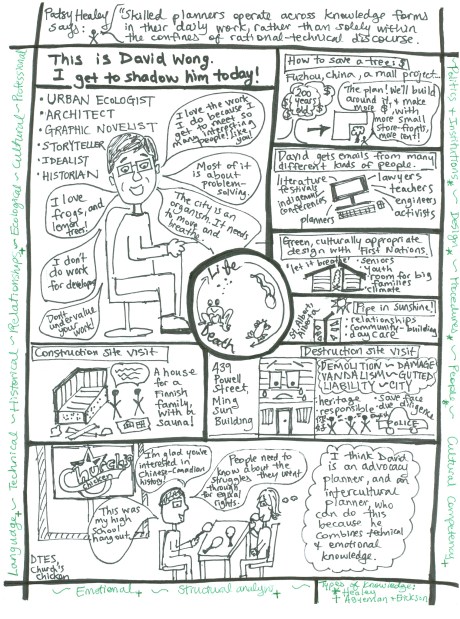
I am currently a student in the Master of Arts in Planning at UBC’s School of Community and Regional Planning. As grad students, we sift through long-winded academic and technical writing – much of it important, but much of it difficult to communicate back out to the world. I worry that as I step up onto the “professional ladder”, as a planner, I will move further away from reality, from lived experience, and community wisdom. So, I would like to begin try to communicate what I am learning in planning school, in an accessible, graphic way. Inspired by a day of shadowing Vancouver architect, David Wong, I attempted to tell the story of the day we spent together in comic-form.
David Wong is an architect, who calls himself an urban ecologist. He recently launched his first graphic novel, Escape to Gold Mountain, a graphic history of the Chinese in North America, published by Arsenal Pulp Press. He was a recipient of a 2012 Queen Elizabeth II Diamond Jubilee Medal in recognition of his professional work and volunteer efforts to champion environmental causes and green design, and was inducted as an Honorary Witness by the Truth and Reconciliation Commission of Canada on September 18, 2013. Most recently, he has been leading a community effort to restore the Ming Sun Benevolent Society’s building in Vancouver’s historic Japantown, at 439 Powell Street. It was truly an honour and a privilege to spend a day with David.
The sum of all these things he does, in my mind, is planning.
-
Migrant
I.
Intrepid travelers,
calibrated to the sun
carrying nothing but the weight of wings
what is it like to have no map,
to trust the lines
of land beneath you,
knowing it will take four life-times,
to get there and back?II.
I am a daughter of migration
of peasants and poverty and politics
and famine and ships
and shorelines
and shorelines and shorelines
and plough-lines
in land passed through the hands of empire
like top-hats and opium and tea.I am the colour of islands
and linen and peatlands and moss
and rice fields and fish skin and copper and silk
of sea of sky of earth
of rock of rock of rock.I am made of
China
like porcelain
like filigree
like bird-bone
like ice
like sorrow
like longing
like home.I am made of brick
like foundation
like clay
like grit
like sweat
like walls
like strength
like home.I am tombolo,
stretched between outcrops
floating lotus
spider spun lines of latitude
I am cloth
woven from
blood-lines
and life-lines
and laugh-lines
and story-lines.III.
They call me a wanderer,
free spirit.I’ll take that.
I’ve never been good at seeing borders,
at following the most direct path
from A to B,
nor reading maps,
let alone being able to unfold them,
re-fold them, neatly.Don’t ask me to tell you where I’m going.
Don’t ask me to care less
to carry less
to let go of the muscle memory of migration
at the base of my neck.I fear a future of
forever facing forward,
forehead forgetting that the passing
of time is told by the breaths
of mitochondria and the
birth of cells.It seems implausible to believe that
I will find the sea
but I remember that these
walls too once had
leaves.IV.
I get restless before a snowfall
start to unfold wings
slip swiftly into skin
grow silver scales.Call it wind,
call it magnetism, call it faith.
Call me sockeye, call me monarch,
call me snow goose, call me caribou.
Call me flighty, call me fickle, call me vagrantbut don’t ask me to stay.
I carry no allegiance
to territory or flag or creed
carry nothing
but the weight of wings
nothing but the muscle memory of migration.
I leave this place,
turn face to sea, to sky, to earth, to sunand return.
* * *
These poems were inspired partly by stories about the way that monarch butterflies born in Canada and the United States migrate nearly 5,000 km to Mexico, and navigate by orienting themselves towards the sun, and how their migration spans 4 generations, as well as why their migration may be endangered.
It was also inspired by the artist-led campaign to reform American immigration policy, Migration is Beautiful, as well as reflections on the way migration is wrapped up in my personal and family histories.





 Kathryn 君妍 Lennon
