Like barnacles,
the grandmothers and grandfathers
cling to habitat,
some more immune to erosion
than others.

Like barnacles,
the grandmothers and grandfathers
cling to habitat,
some more immune to erosion
than others.

So She Sews
1.
There is a sewing machine.
One passed
from great-grandmother to mother,
that has waited on a daughter’s
grandmother’s
balcony,
over mountains and across an ocean for twenty years
for her
clumsy, too big hands to
thread bobbin and hesitantly slide the fabric of the universe
below foot; twist knob, tap pedal with her
big foot
coax hesitation into hum
s-t-i-t-c-h together frayed sides of a gap
oils of her fingertips leaving invisible
indelible imprints on
cotton
as mechanical friction
smells of sewing machine
oil and heavy metal scissors
mingle
with scraps and threads and jigsaw pattern pieces on wooden table
the five o’clock kitchen sounds of neighbours
the stitch stitch tap stitch stitch tap
the whir of the fan:
these parts
sum up to
the weight of words
that fall like snowflakes on black construction paper
like typewriter letters pressed into a page in the absence of ink
absence of silence.
2.
Her mother picks the phone up
off the table to call home.
Time travels and time warps
the words that stick to sweaty
phone receiver, words that
might mend
a tear in the fabric of the
universe,
words that
will ask her father if
he can find a newspaper clipping
at the bottom of a drawer
under paperclips and receipts and phone bills
and mail that article express
so it will arrive in time for the cremation of her grandfather,
words
that will ask him if he can find
the newspaper article that slid off her grandfather’s lap
as they rolled his wheelchair out of the hospital
days before he passed, the only copy of
the only
printed interview about his life, so the story
pressed into that newsprint can be
released into the afterlife.
Her grandmother will thank him then,
though his
foreign ears will not twist the sounds
of her words
to fit the fabric of his universe.
用心。Yong sum. Use heart.
To be diligent, attentive, careful; with motive, intention.
My mother tells me this in our yellow kitchen,
scratching blue pen on white paper.
Too much forgetting who we are,
forgetting to use both head and heart,
together, instead taught to keep them
segregated, lest we love too much.
Tombolo
I am just one grain of sand
reaching for an island
that I will never touch.
You are just one grain of sand
reaching for an island
that you will never touch.
You are just one grain of sand
reaching for an island
that you will never touch.
You are just one grain of sand
reaching for an island
that you will never touch.
Grains of sand,
we catch
one upon each other,
as waves circle round,
til we start to stretch like silk, and maybe
a thousand thousand years from now
we will bridge a gap.
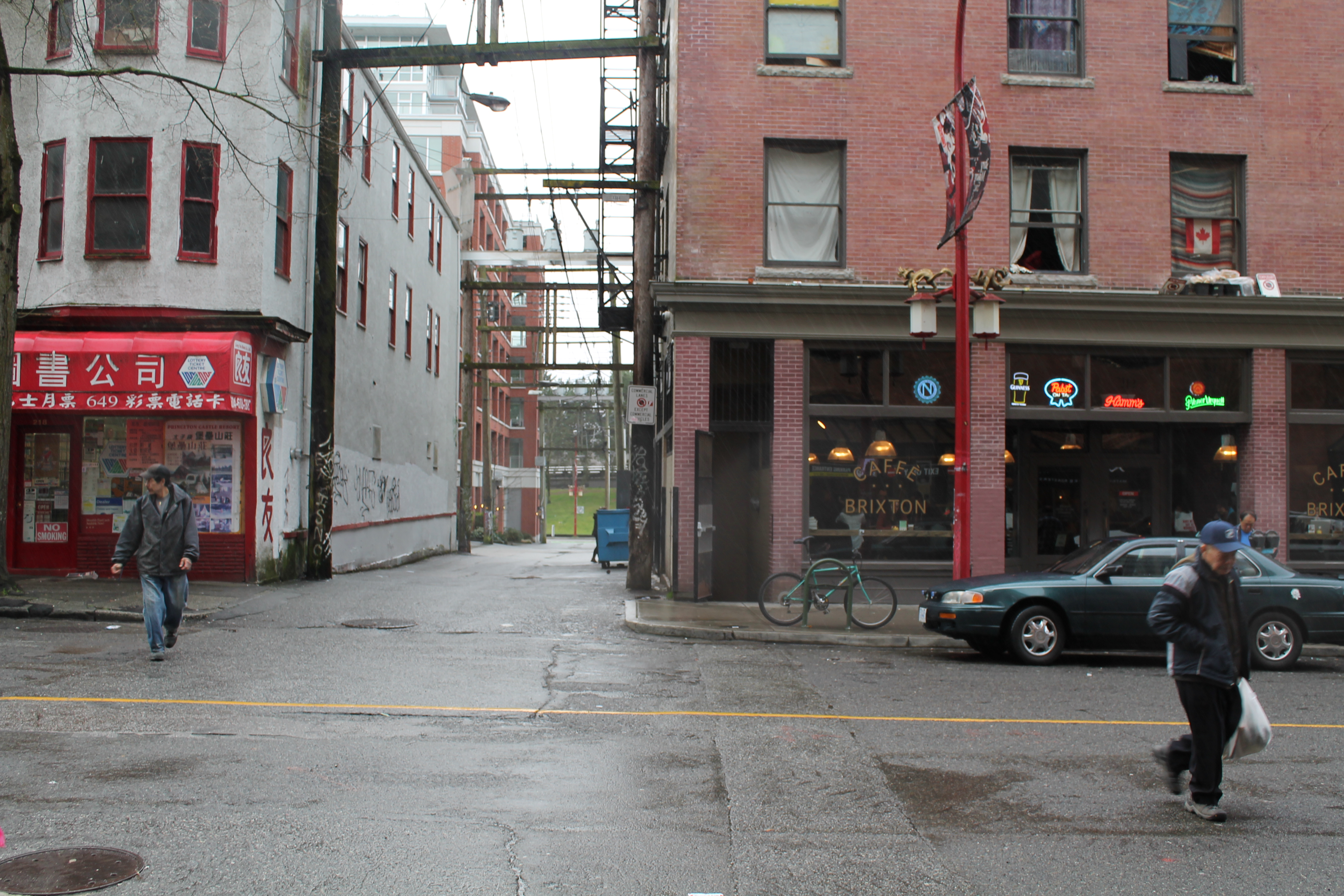
East Georgia Street, 200 Block
Street where young, upright, English-speaking hipsters
carrying paper coffee cups stride
by old, bent-backed, Cantonese-speaking seniors
carrying plastic grocery bags, shuffling
by construction crews who pound the ground.
The grandmothers haggle loud
enough that I can hear them through walls
(they sound like they’re arguing
but they’ll tell you they’re just talking).
I buy red twine, dou miu, batteries, a macchiato
then ride home on the retro bike my aunt gave me
with a whole fish dangling
from my handlebars.
She’s learning how to time travel,
learning how to trace the threads of her making back to the spools from which they’ve unwound.
She’s learning how to untie
tongues tied
how to untie
land tied
how to untie
railway ties
how to untie
pipelines
how to untie
hands tied
behind backs.
She’s learning to untie
nots
like the can-nots
and do-nots
and are-nots
and should-nots.
She’s learning to untie
and trace these threads back to the spools from which they’ve
unwound, so that she can
tie
together frayed ends of old threads
to weave webs
that hold up the sky.

There once was an Asian Canadian poet
sitting lonely under a tree.
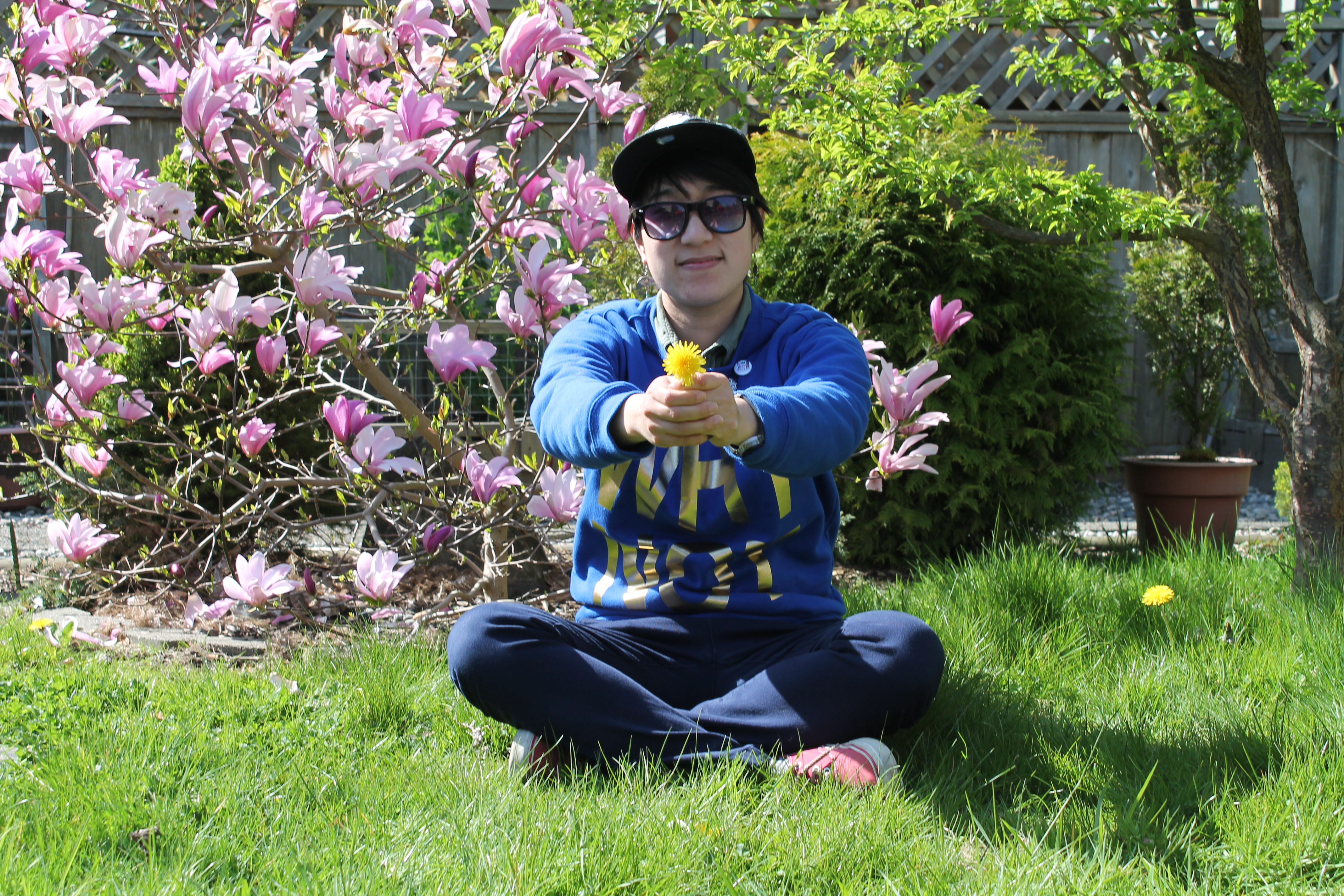
There once was another Asian Canadian poet
sitting lonely under another tree.
Oh so lonely, oh so lonely
because they didn’t see
themselves reflected
in the poetry community.
Until one day they met at a poetry slam
(and both ranted a bit about identity).
Then, they realized they were not alone!

Even so, they are still trying to figure out how to be,
they wonder why we don’t see
more diversity
in the arts community
and they are not always sure if they want to be considered
“Asian Canadian poets” (could they not just be
poets?).
 But they sure are happy
that they found each other,
under that flowering tree.
With Janice Lee. http://janicejolee.ca
I’m tired of this empire:
tired of being mistress to its master,
raw to its refined,
spice to its substance,
colour to its white,
extra to its ordinary,
outlier to its centre.
I’m tired of its tongue
upon my tongue.
I don’t know how to pray.
I once found a bible tucked away on a shelf in a backroom in our basement,
and unzipped its black cover to
sneak a few peeks. My father was taught
by nuns, St. Aloysius,
fish Fridays, communion, but
only baptized us out of
habit.
Sundays he would pack sesame snaps, granola bars and juice boxes
into brown paper bags,
take us walking in marshland, meadow, forest,
Elk Island, Hawrelark Park, Clifford E. Lee Nature
Sanctuary, make us stop and wait while he thumbed well-worn pages of
his plant id book, to the songs of
chickadees. We’d drag our feet down aspen aisles, only drawn forwards
by the promise of
McDonald’s afterwards.
He never taught us to sit still through mass
but he taught us to be quiet,
to sit with our backs to the hill and eyes on the river,
to kneel beneath branches among pine needles and ladybugs,
to stand still
and stare up in awe at Big Dipper, Cassiopeia, Orion.
 Kathryn 君妍 Lennon